
5 Successful Relationship Strategies When Living With Chronic Disease

As Parkinson’s progressed, we had to learn new, successful relationship strategies. Here are 5 strategies that made all the difference.

When my guy was initially diagnosed with Parkinson’s disease, his symptoms were so mild that it was easy to forget, and it barely affected our lifestyle or relationship.
But as things progressed, we slowly needed to make adjustments, including learning new relationship strategies.
These relationship strategies have been key to helping Doug and me navigate the constant adjustments of living with chronic disease.
Parkinson’s disease is a slow, progressive disease. So when Doug was initially diagnosed, first, I wasn’t surprised because I saw the symptoms years before his diagnosis, but it also didn’t initially change much in our relationship.
At the time, Doug’s symptoms were mild, a slight tremor on one side of his body. So it didn’t affect much in our day-to-day living, and therefore it was easy to ignore.
Living With Chronic Disease
But now, as the years have gone by, and Doug’s PD is progressing, we find ourselves continually having to adjust, in all aspects of our life and relationship.
This part of living with a chronic disease is not easy. Not just for the one experiencing the disease but also for their caregivers and the loved ones around them.
Intellectually, I know nothing is constant but change itself. I often told my children when they were growing up that being flexible and willing to adapt would help them very much in life.
Little did I realize just how much I, too, would have to use this tool.
Adapting and Its Benefits
When it comes to adapting, research shows a positive relation between adaptability and life satisfaction.
The better we are able to be flexible and adapt, the more we can adjust our psychological resources for new and ever-changing conditions.
Being a caregiver for your spouse is different from other kinds of caregiving, and there can be a lot of mixed emotions that come with it.
Finding successful relationship strategies to help you as a couple manage the ever-changing climate helps tremendously,
Being a caregiver for your spouse is different from other kinds of caregiving, and there can be a lot of mixed emotions that come with it.
In a relationship, often people will come into it with a specific role to play. Husband, wife, provider, nurturer, domestic, professional, etc. Over time, these roles can become cemented in stone.
I know women whose husbands provide for them, and they have little knowledge of their bills and investments.
I also know men whose wives do the majority of the cooking and cleaning and, should their wife gets sick, it would be a steep learning curve to take on these domestic responsibilities.
Of course, there are many more roles than these in a relationship, and I am not judging by any means. Each relationship has its own structure.
I am merely pointing out how roles in a relationship can become ingrained and, as time moves on, it can become increasingly more difficult to move out of our comfort zone.
Flexibility and Other Successful Relationship Strategies
Living with Parkinson’s disease means Doug and I have to learn to be continually fluid and flexible. Not an easy feat.
Just when we think we are getting the hang of a new schedule or new roles for ourselves, we inevitably have to adjust again, and again. And this can sometimes be extremely hard to do.
Yes, I get frustrated, and angry, and sad, but so does Doug. It’s a constant adjustment.
But because we have to have this flexibility, I also feel like I am much better equipped to adapt and adjust in other areas of my life, like with friends, my children, and my job.

5 Successful Relationship Strategies
I talked to Doug about this week’s blog post topic, and together we wanted to share with you our top 5 successful relationship strategies. And, how we feel, a relationship must evolve when living with a chronic disease.
1. Sense Of Humor
Having a sense of humor will help you in all aspects of your life, but definitely when you are living with Parkinson’s or any other chronic disease.
Life can be crazy, stressful, and if you can’t find the humor in things, I think it would be very easy to fall into depression.
I think Doug and I both have a pretty good sense of humor. Thankfully, somehow it works out that when I’m not seeing the bright side, Doug’s humor is on, and alternatively, when he’s feeling down, mine kicks in.
It’s important to be open and honest, and laugh at your faults and personality. Doug oftentimes makes fun of my type A personality, but deep down, I know he loves and appreciates it.
I, in turn, tease Doug, but he also knows the things I tease him about are the things I like about him as well.
Opposites attract, and you can’t let that pull you apart over time.
2. Pride Must Take A Backseat
I’ll be honest, Doug and I both are prideful people. Too much. We both can be prideful and stubborn as mules.
On the positive side, Parkinson’s has shown us that people need each other, and that is okay. Doug has had to set aside his pride and ask for help. It’s not easy, I can tell, and I try to show him it is always okay to ask for help.
I know this is probably one of the more sensitive things when it comes to a progressive chronic disease. Knowing you will more than likely need increasingly more and more help as the days, months, and years go on.
A Two-Way Street
I think it’s extremely important, as a caregiver, to assure and affirm your loved one that it is okay. Let them know you understand and that you are up for the job.
Yet it is also important for us as caregivers to be open and honest with ourselves, our family, and our loved ones. If you need a break, you need a break! It’s okay to need help too.
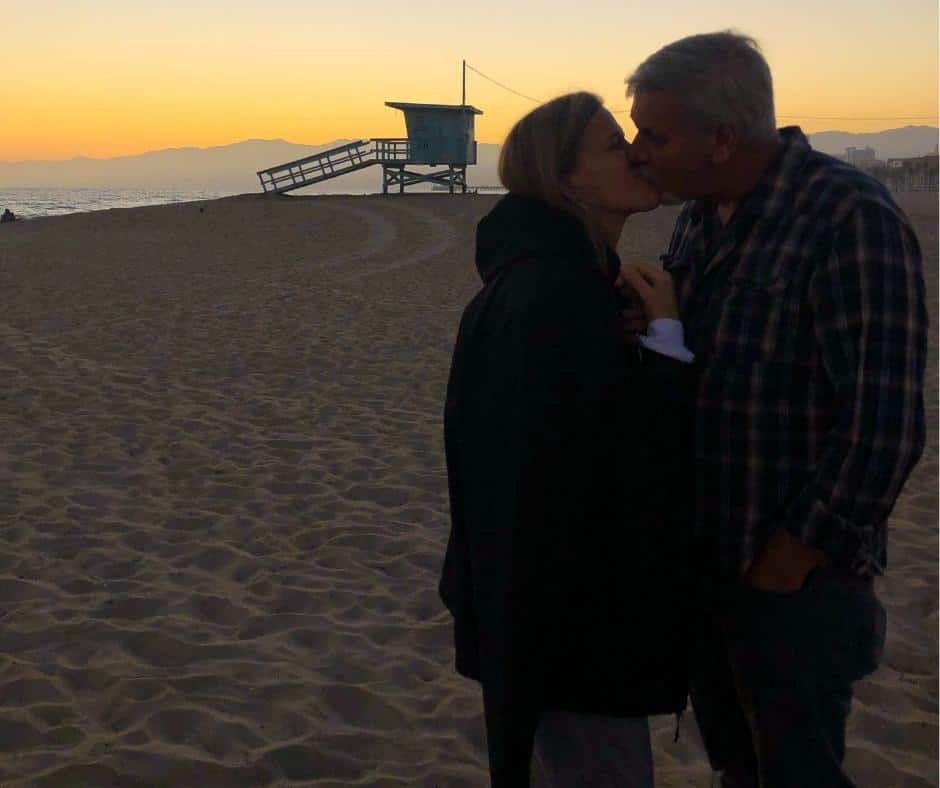
There are times when I tell Doug that I need a break. I need just a few minutes to gather my thoughts and rest my body.
One of the most important and special times for me is the first thing in the morning when I wake up. I have a mental health morning routine that I do every morning before starting my day.
It has taken Doug a while to figure out that this morning routine is a non-negotiable. And, short of an emergency, I need this time before I begin the day.
Learning to let down your pride and to be vulnerable is not always easy, but in a relationship, it is imperative, and when you are living with a chronic disease, it is necessary. It is all about give and take and teamwork.
3. Never Give Up
This is not to say you can’t take a break to gather yourself, or just stop trying for a time. To never give up, the way Doug and I see it, is to always explore new options, ideas, treatments, etc.
To never give up learning about the condition you are living with, or trying to improve. Keep trying to live as full a life as possible.
It’s okay to take a break. Continually living with your thoughts on improving and growing can get tiring, and it’s okay to coast for a time, but don’t ever stop trying.
Doug and talk about this often, and it goes for both of us. I ask Doug to never stop trying to live as fully as he can, and he asks that I do the same.
Doug is appreciative of my help and support, but not at the expense of my losing quality of life, and only being defined as a caregiver.
4. Don’t Pull Away
I think this is more of an issue for me than it is for Doug, but still, we both have our moments.
Sometimes, when I get scared of our future or when I get afraid of being alone, instead of drawing closer to Doug, I pull away.
I’m not proud of this behavior, but I think one of the most prominent feelings Doug’s diagnosis brings up for me is a feelings of abandonment. And instead of sitting in this fear and recognizing it, sometimes I pull away instead.
Funny thing is, when Doug and I talk about this, when I get vulnerable enough, and get rid of my pride enough to discuss my fear, it all kind of dissipates, and I am surprised at how we both are feeling similar feelings.
5. Experiment And Don’t Be Afraid To Try
Sometimes learning new things can be empowering.
This one goes hand in hand with never giving up. I think it can be very easy to slowly, over time, make your world smaller and smaller when living with Parkinson’s or any other disease.
It can be tough to face each day when things are progressing not necessarily for the better. You want to play it “safe” and just – stop. – trying.
May I strongly encourage you not to stop. I have found, when Doug and I push through fear, anguish, and pain, oftentimes that is where we find the golden nuggets.
Often this is when we find new support systems, new ideas and recommendations, and a new closer bond together.

Caregiver Wellness Planner
A comprehensive 10-page wellness planner designed specifically for cargivers to prioritize self-care and track healthy habits throughout the year.
Discoveries Along The Way
Living with Parkinson’s is something I wish upon no one, and if I could snap my fingers for it all to go away, you bet I would.
BUT…Doug and I have discovered things along this path that we would never have discovered anywhere else.
It has brought us closer and made us stronger. Similar to the way straining your muscles when you work out creates tiny muscular tears, only for them to repair and make your body stronger. Odd comparison, I know, but I’m a nurse and former athletic trainer…sorry.
There are other ways relationships evolve as a chronic disease progresses, but Doug and I felt these five tips were the most important, and they have helped us tremendously.
Now it’s your turn. What would be your top helpful tips? I’d love to hear your thoughts and suggestions in the comments section below.
More Related Content for Caregivers
The Best Mental Health Morning Routine For Care Partners
How To Use Essential Oils To Reduce Caregiver Stress
Additional Healthy Recipes and Wellness Support





VIDEO: 5 Successful Relationship Strategies When Living With Chronic Disease

Let’s Connect
I hope you found this information helpful and you are able to put it to use in your relationships.
If you do apply some of these tips, and you find it works for you, please let me know in the comments below. I would love to hear from you.
You can also follow me and my life on Cape Cod on my Instagram page @upsidelane.