
Best Vegan Cheese For A Dairy Free Charcuterie Board

Vegan cheese has come a long way and often tastes like the real deal. Let’s look at the best vegan cheese for a dairy-free charcuterie board.
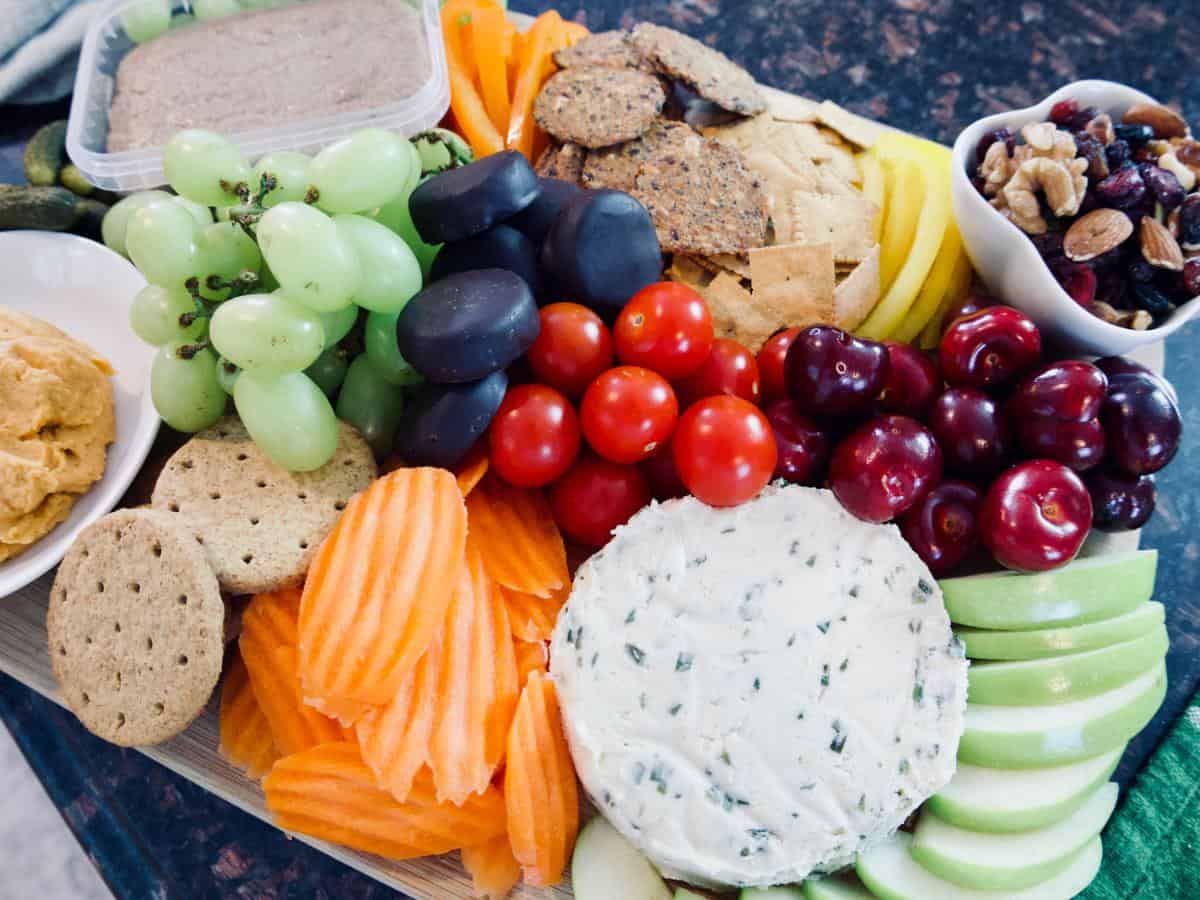
Vegan cheese has come a long way from the old days when it tasted like cardboard and was full of bad oils and salt!
Today, plant-based cheeses often taste like the real deal. So let’s look at some of the best vegan cheese for a charcuterie board and other dairy-free options.
When I became vegan, almost 20 years ago now, there were not a lot of options in terms of finding 100% plant-based vegan cheese.
The ones I did find were filled with terrible ingredients – lots of bad oils, binders, fillers, and salt.
And they didn’t even look like any kind of cheese you’d want to eat. Most were a drab beige or gray color, and the textures were terrible!
Today, you can walk into almost any grocery store and find a least one or two selections of vegan plant-based cheeses.
And when it comes to making an epic vegan charcuterie board, using a variety of whole foods like fresh fruit, raw veggies, vegan meats, and vegan cheese blocks is a great way to serve up some healthy snacks with a variety of flavors for special occasions.
This article may contain some affiliate links for your convenience. You can read the full disclosure policy.
What Does Charcuterie Mean?
Charcuterie is a French word, and the actual definition of charcuterie is a delicatessen specializing in dressed meats and meat dishes; the products sold in such a shop.
Charcuterie was first introduced in 1825, and these days, we actually misuse the term.
We use charcuterie to refer to food platters, a grazing board, or even a vegan snack board, regardless of whether or not there is charcuterie like salami, prosciutto, or ham on the board.
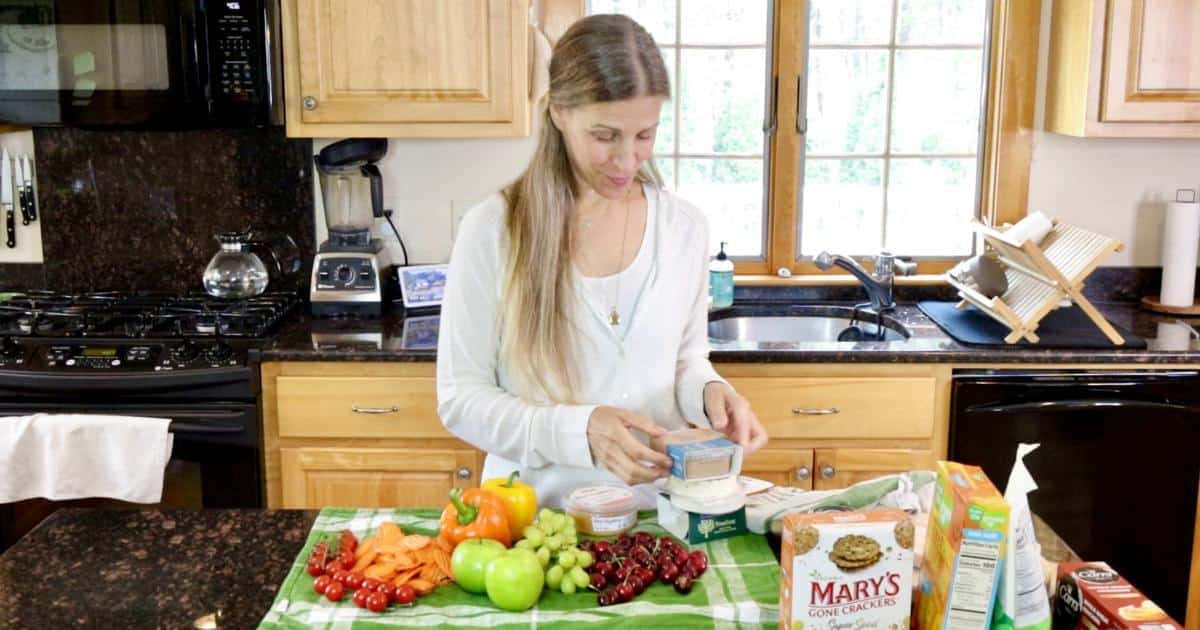
Charcuterie Board or Cheese Board: What Is The Difference?
Charcuterie boards and cheese boards are similar in that they both contain a variety of appetizer-like foods that can be arranged quite decadently on beautiful platters. However, there are definitely some differences.
Charcuterie Board
Now that we know what “charcuterie” actually means, the difference between a charcuterie board and a cheese board may be more obvious.
A traditional charcuterie board is usually a serving board or wooden tray filled with a range of cured and preserved meat products such as ham, salami, prosciutto, and more.
They may also contain other foods like pickles, olives, fruit preserves, and even cheese, but these are side components on the board for a variety of different flavors and textures.
Cheese Board
Cheese boards are usually smaller boards, like a small wooden board, made up primarily of a variety of cheeses with different textures.
Soft cheeses, harder cheeses, and spreadable cheeses like cream cheese are all popular types of cheese to add to a traditional cheese board.
Small clusters of nuts and dry fruits, along with fresh sliced fruits and vegetables, may also be arranged on the platter or a small board to complement the different cheeses.
Think apples, bell peppers, cherry tomatoes, sunflower seeds, and other great options.
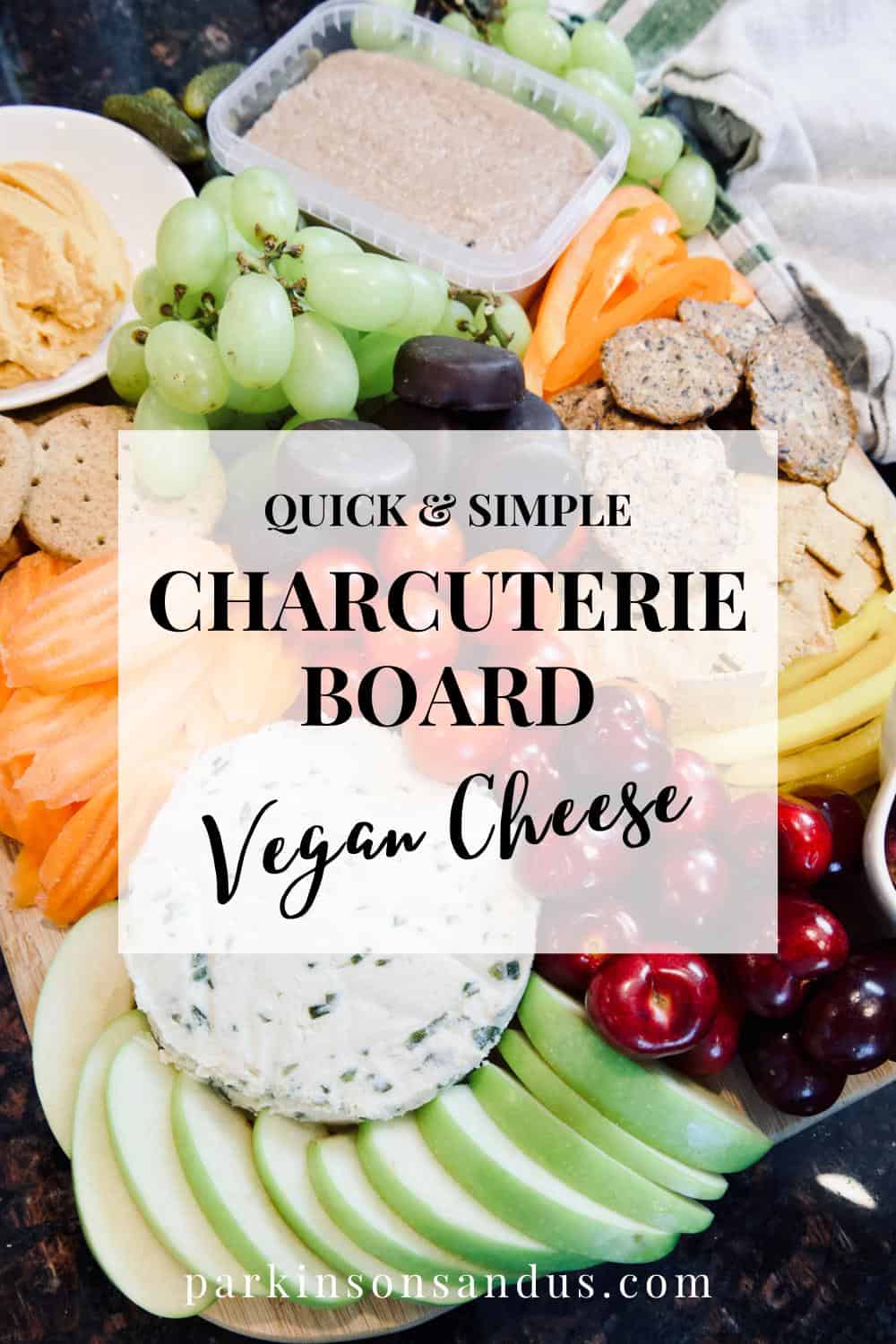
Best Vegan Cheese For a Charcuterie Board
To create the best vegan charcuterie board for your next party, the dairy-free cheese you buy must be the star of the show.
You’ll want to add a variety of textures when it comes to vegan cheese. Depending on the size of your board, pick a hard cheese, a soft cheese, and a creamy spreadable cheese.
There are many different vegan cheese brands out there, so it can get confusing when you head to your local grocery store.
Here are some of my vegan cheese for charcuterie board favorites.
Miyoko’s Creamery Classic Double Cream Chive Artisan Vegan Cheese
A soft, spreadable cheese made with organic cultured cashew milk. Robust flavor, deliciously smooth, and speckled with finely chopped chives.
Organic, kosher, gluten-free, lactose-free, no soy.
Treeline Vegan Soft Cheese – Garlic Herb
A cashew-based cheese with garlic and herbs gives it a zesty flavor experience.
Non-GMO verified, kosher
Miyoko’s Creamery Fresh Vegan Mozzarella, Organic Cashew Milk Artisan Cheese
Crafted from organic cultured cashew milk. Soft, silky cheese with a thick, creamy texture, springy bounce, and a mild, slightly sweet taste. Enjoy it warm and melty, or fresh from the fridge.
Organic, kosher, gluten-free, lactose-free, no soy.
Kite Hill Garden Veggie Vegan Cream Cheese
A vegan cheese crafted from almond milk, non-GMO, and gluten-free
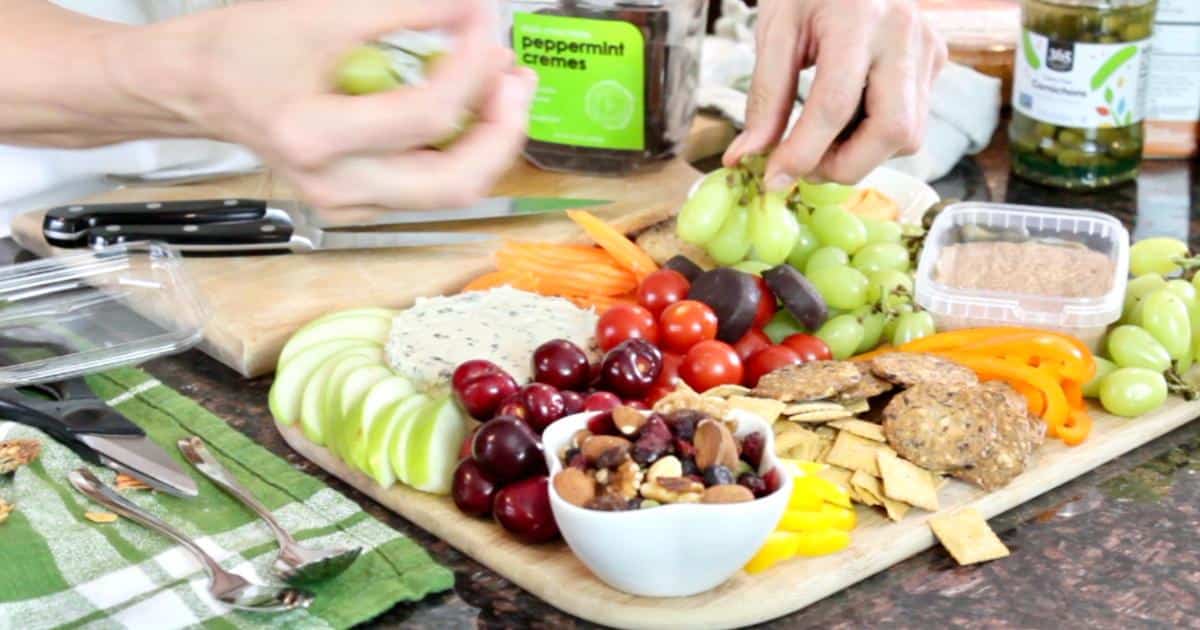
The Perfect Vegan Charcuterie Board Technique
Making a vegan or vegetarian charcuterie board is no different than making a traditional board.
The vegetarian or vegan version may have different food items, but the arrangement techniques are just the same.
Here are a few tips and techniques I find helpful.
- Gather all of your supplies – gathering all of your supplies beforehand makes designing and arranging so much quicker and easier. Gather your board, food items, small bowls, and anything else you feel you will be using for your vegan board.
- Large to small items – when you are designing your delicious vegan charcuterie board, a good rule of thumb is to place the larger items on the board first, like the serving bowls and dishes. Then you can work your way down to the smaller items.
- No empty spaces – when you are designing and filling up your board, don’t be shy. Load up your board and fill in every space possible. A great way to do this is to use nuts and seeds, dried fruit, and chocolates to fill in those tiny nooks and crannies.
- Sliced fruit last – if you are using fruit, like sliced apples or pears, the best thing to do is to wait to place them on the board last. And if you want to prevent them from browning, brush a bit of lemon juice over the fruit slices.
- Storing – one of the great things about making your own vegan charcuterie board is that you can do most of the prep work ahead of time. Prepare your board with all of the food items that are okay to be refrigerated, and leave off the dry food items like crackers, nuts, and seeds. Cover the board with plastic wrap and store it in the fridge. For the best flavor, 30 minutes before reveal time, take your charcuterie board out of the fridge and allow it to get to room temperature before serving.
What To Put On A Vegan Cheese Charcuterie Board
Really, the sky’s the limit when it comes to what you should put on your charcuterie board; there are no hard and fast rules.
Here are some good choices to help you get started and to help get your creative juices flowing.
Vegan Cheese
Hard Vegan Cheese – hard cheddar, Colby, manchego, gouda, parmesan.
Soft Vegan Cheese – vegan feta, gorgonzola, brie, or vegan mozzarella.
Spreadable Vegan Cheese – vegan cream cheese, spreadable cashew-based cheese, or coconut-based cheese.
Sliced Fruits and Vegetables
Fruits – apples, pears, strawberries, grapes, cherries, mini orange slices, blueberries, raspberries, kiwi, figs, watermelon.
Baby pickles, baby cucumbers, cherry tomatoes, olives, etc.
Vegetables – carrots, celery, green beans, broccoli, asparagus, cauliflower, snap peas, olives, baby pickles, etc.
Vegan Dips, Jams, and Spreads
These are the condiments that pair well with your fruits, vegetables, and crackers.
Hummus, peanut butter, and fruit spreads like strawberry, raspberry, fig jam, and honey.
Vegan Snacks
Sweet Vegan Snacks – cookies, biscuits, chocolate, chocolate almonds or cherries, and dried fruit.
Savory Vegan Snacks – chips, pretzels, crackers, popcorn, nuts, and seeds.

Is Vegan Cheese For A Charcuterie Board Healthy?
Most vegan cheese today is made with healthier ingredients than when it first came onto the market years ago.
I wouldn’t consider vegan cheese to be a nutrient-dense food, but then again, neither would I consider the real thing, regular dairy cheese, to be nutrient-dense either.
Vegan cheese doesn’t contain growth hormones like regular dairy cheese might, and although vegan cheese made with coconut oil contains saturated fat, it is often in similar amounts to dairy cheese.
Saturated fats are found in animal foods, including dairy and eggs, as well as tropical oils like coconut and palm oil.
Although there is no one recipe to make vegan cheese, some of the more common vegan cheese ingredients are:
- nuts like cashews and almonds
- coconut oil to mimic the texture and melt of regular cheese
- pea protein
- starches like potato starch and cornstarch
- nutritional yeast
- fresh herbs
- added B12
- thickeners and binding ingredients
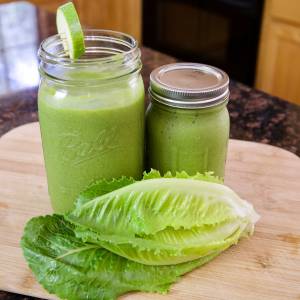
10 Fresh & Easy Green Smoothie Recipes
Jumpstart your mornings with 10 delicious green smoothie recipes using simple ingredients you already have – so tasty you won’t even taste the greens!
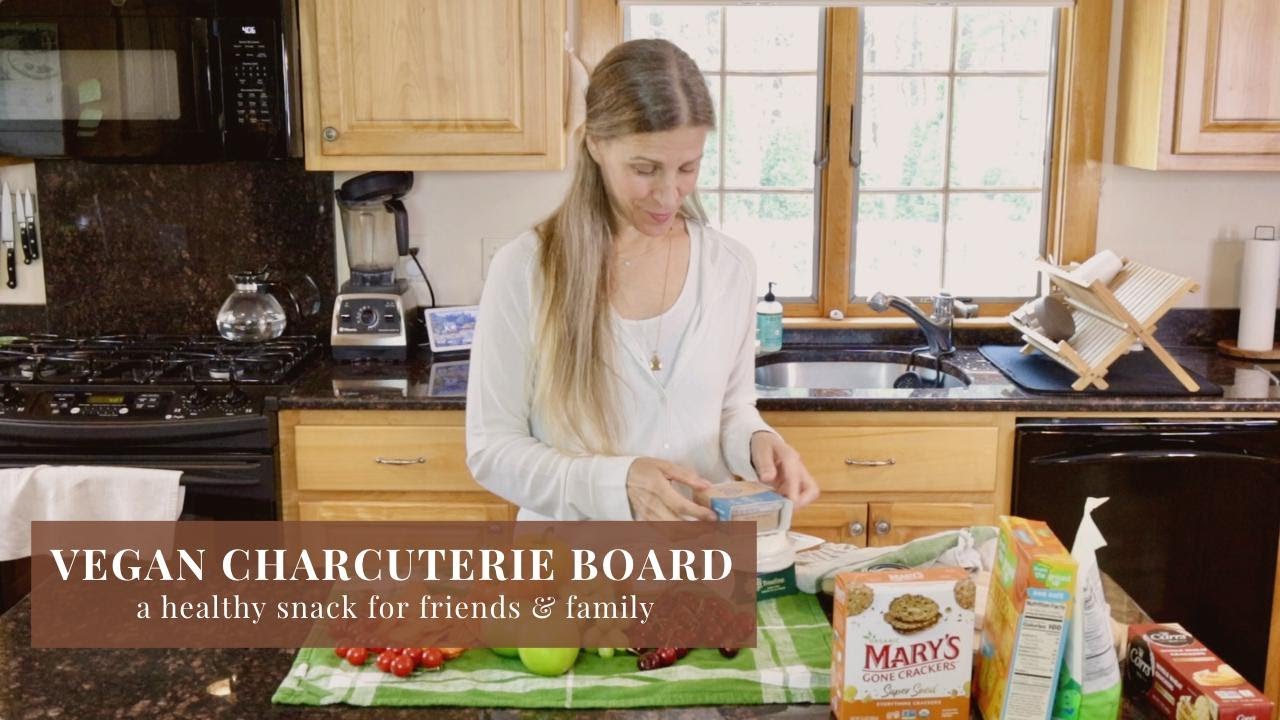
VIDEO: Making A Dairy Free Charcuterie Board with Vegan Cheese
More Healthy Recipes and Wellness Support


Let’s Connect
If you enjoyed this post, I would love it if you commented below and shared it with your friends and family.
You can also follow me and my life on Cape Cod on my Instagram page @upsidelane.
Printable Recipe Card
Dairy Free Charcuterie Board – Vegan Cheese
Ingredients
Equipment
Method
- Clean the charcuterie board and all of your fruits and vegetables. Pat to dry thoroughly.
- Cut baby carrots and peppers into small slices.
- Separate out the grapes into small bunches so people can pick up freely.
- De-stem the cherries.
- NOTE: Do not cut the apple just yet, to prevent browining.
- First, place all of your larger items on the board in desired places. Things like the cheese wheel, small dishes and bowls filled with hummus and nuts.
- Second, arrange the grapes, cherries, and tomatoes.
- Next add the sliced carrots and peppers.NOTE: If you'd like, it's a nice idea to arrange these near the hummus or cheeses.
- Slice up the apple and place it on the charcuterie board.
- Add the crackers and biscuits.
- Finally top off the board with delicious dark chocolate peppermints or almonds.
- Place a cheese knife into the vegan cheese wheel, and a small serving spoon into the hummus dish.
- ENJOY!
Nutrition
Notes
- Feel free to mix up your food choices. This is just an example for you to get started.
- If you do not have a wooden board, you can always use other types of boards including a cutting board.
- You can also line a baking sheet with either unbleached parchment paper or a cotton or linen napkin to make a beautiful board.
- To prepare your board in advance, place all of the items that can be refrigerated on the board. Cover with plastic wrap and place in the fridge. Wait to place the dry food items, like the crackers, biscuits, nuts, and seeds, so they don’t get soggy.
- 30-minutes before reveal time, take the semi-prepared charcuterie board out of the fridge, and allow it to get to room temperature for the best flavor.
- Finish preparing your board with all of the dry ingredients, etc.
- ENJOY!
What a beautiful looking charcuterie board!
Thank you so much.